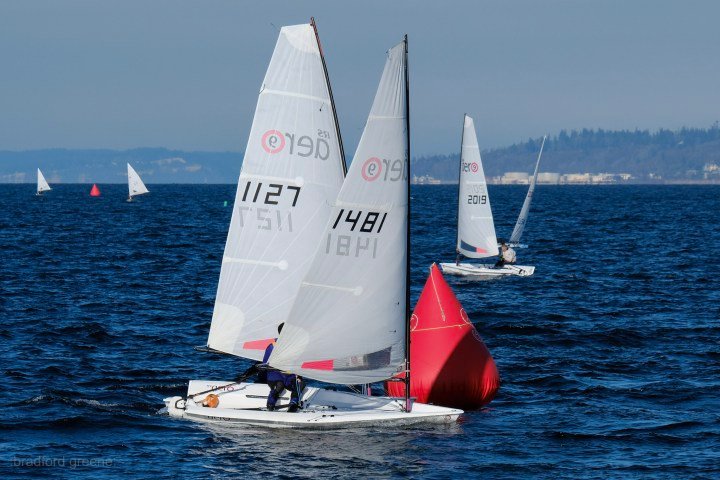
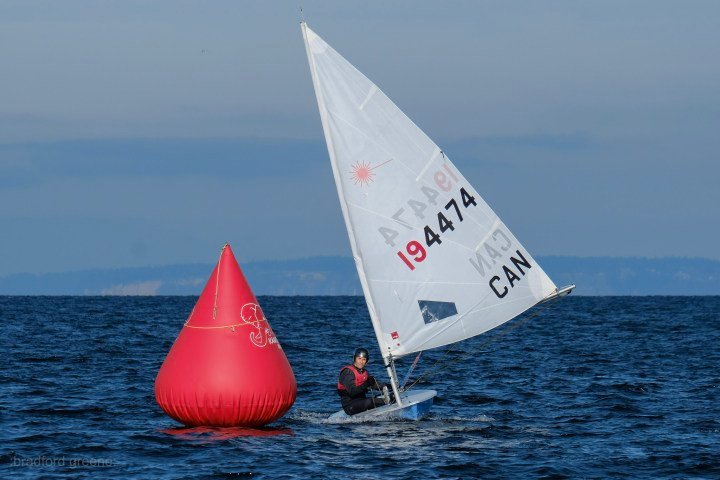
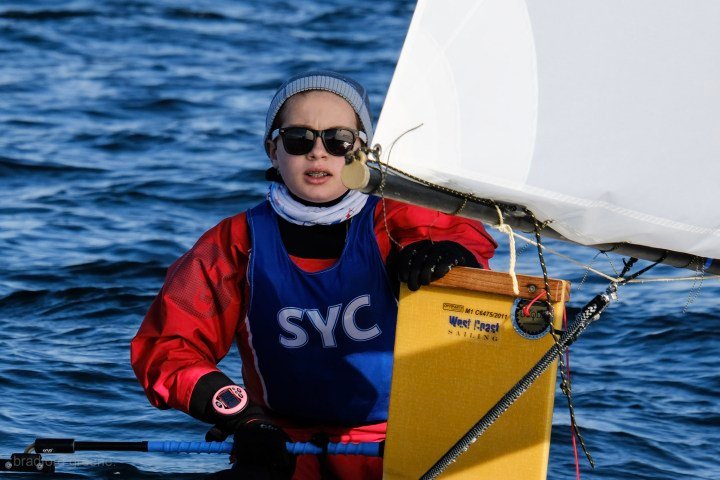
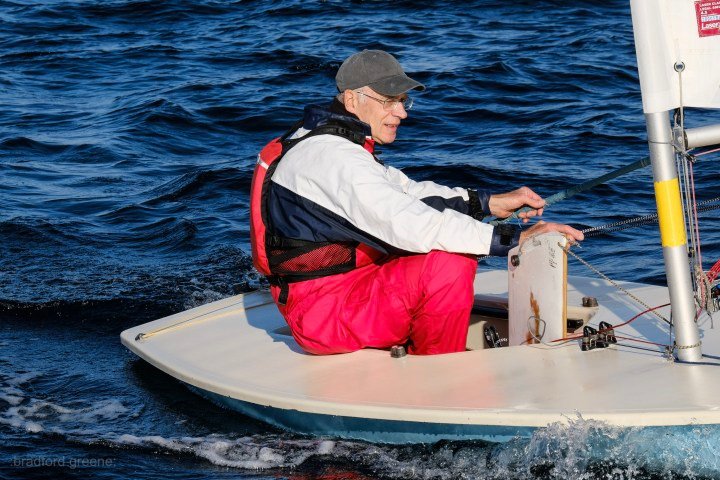
Once upon a time when there were 50 Lasers lining up for the Seattle Laser Fleet‘s Frigid Digit regatta, there wasn’t much thought of adding other classes. Over the decades the event has moved to various spots around Lake Washington, but now appears to have found a home with Cortinthian YC-Seattle doing the race management as a multi-class event on Puget Sound.
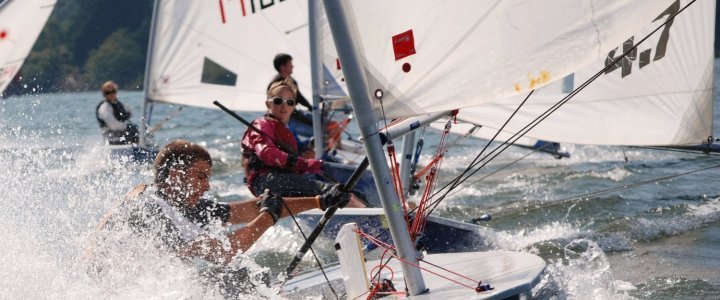
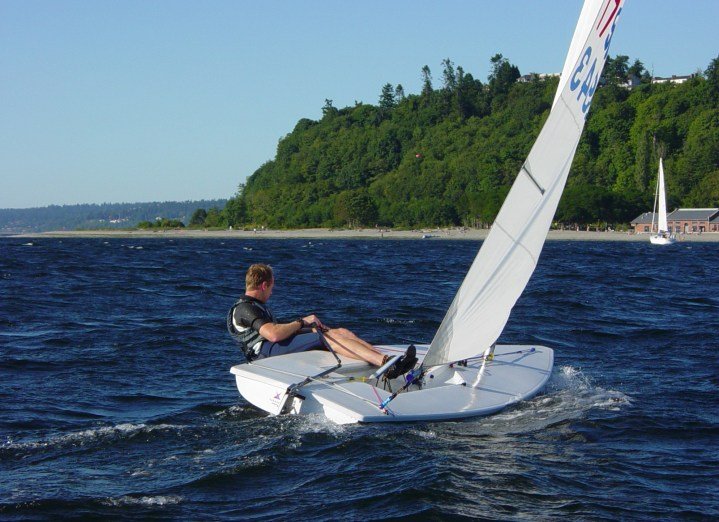
The history of Frigid Digit dictates that coverage starts with the Laser class. As was seen during the Turkey Bowl/Laser Districts last fall, the Laser class is definitely seeing a youth movement in the region. And, as if right from the brochure, it was growing young men making the move up from the smaller Radial rig to the Standard rig. Owen Timms, Max Doane and Kit Stoll all made the switch and were sailing at the front of the fleet all weekend. It was David Brink, a bit older but not that far removed from the Radial, who won the weekend and had his name written on the back of the trophy (for the second time!). His boat name, TCB, stands for Taking Care of Business. That he did.
Photos courtest of Brad Greene. Thanks, Brad!
Aeros
Aeros off the start
Bob Ennenberg of Jericho
Tasar jockeying
Optis rule
Jim Santroch
Radials rounding
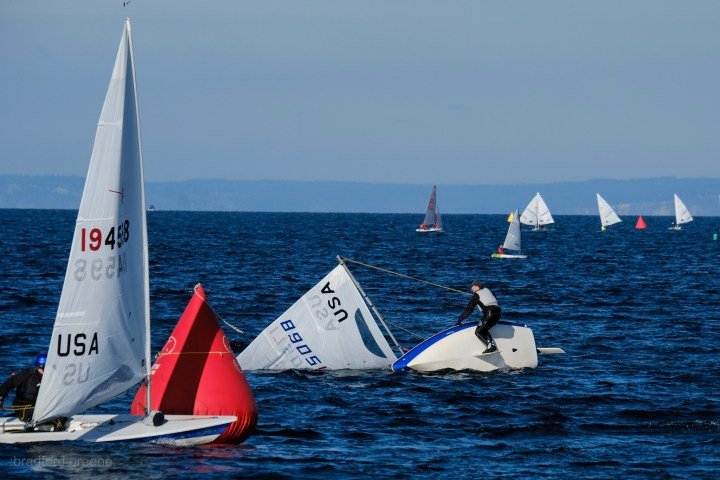
There weren’t many capsizes, but a few.
Lasers
The Tasar fleet had “arranged” among themselves for it to be a one day regatta. While both days were good sailing days, they definitely picked the better of two. Bright sunshine and 8-14 knots ruled the day. On top of the frighteningly talented six boat fleet was Jay Renehan who won all four races entered.
Renehan and fellow Tasar skipper Jonathan McKee returned Sunday to have some fun in the biggest class, the 21-boat RS Aero fleet. It was Dalton Bergan who won the last three races to dominate that fleet in Sunday’s lighter air, with Dad-in-law Carl Buchan second. Third was Mike Johnson, one of the more recent Laser-to-Aero transplants, who is clearly getting the hang of the lightweight Aero.
In the Laser Radial class, Seattle’s young Erik Anderson class came up with a convincing victory over Bob Ennenberg of the Jericho Sailing Association of Vancouver, BC. Ennenberg had a smile on his face the entire time, and proved that the Radial is a great place for smaller adults or those that don’t want to risk the wrath of the standard rig if conditions deteriorate. Three Radial sailors made the trip from Bellingham.
There were three brave Opti sailors on the course as well, and without a doubt they had the biggest smiles all weekend. Sam Bush won all the races except one.
This regatta showed that singlehanded sailing, and dinghy sailing in general, is alive and well in Seattle. The RS Aero continues to attract a large group of top-flight competitors and the Lasers are the premiere venue for young people moving up the sailing ranks and honing their skills.
Correction: An earlier version of this story cited Neil Bennett’s comments as the meeting “minutes.” Neil’s comments below are actually “an overview to the membership that recounts the summary of the outcome decisions.” Sailish regrets the error.
It’s January, and time for the PHRF handicappers and officers to gather and ponder ratings and such. This past Sunday the event was held downstairs at CYC-Seattle. Just outside the marina, a very well attended Frigid Digit regatta was in full swing and on full display. It’s January in Seattle and we’re all thinking about racing…. Neil Bennett shared the meeting summary with me, and I was glad to hear he was “counting” on sailish to publish it. Here we go:
The Annual General Meeting of the PHRF-NW Handicapper’s Council was held on Sunday, January 27, 2019 at the Corinthian Yacht Club of Seattle. This meeting serves as a means to communicate with interested members and review rating appeals that had been properly filed.
Once upon a time the PHRF burgee.
The Council spent considerable time discussing the status of sailboat racing in the greater Puget Sound area. All clubs are persevering in the development of their racing programs through the introduction of “cruising class ratings’ for local or regional club regattas. Generally speaking, all clubs ask that Cruising Class boats join PHRF-NW for an official Performance Rating, then receive an adjusted ‘local rating’ to take into account each individual club’s and boat’s situations. These ratings are valid only in the local club races and are not ‘trailerable’ to out of a boat’s area regattas.
We introduced a new process to our deliberation; that of Fleet Reviews with recommendations for Council action, if appropriate. I will report on the specific outcome of this review process in the next paragraph. We canvassed the approximately 12 – 15 audience attendees who unanimously agreed that the pro-active approach of the Council, with due diligence in research and adherence to due process and PHRF - NW bylaws was appreciated and one which they wished to see continue.
The first review included two well-sailed boats, the Sierra 26’s Uno and Dos. The end result is that there was a recommendation and motion made to adjust each boats ratings by 6 seconds faster, making Uno move from 81 to 75 and Dos from 78 to 71. Owner/Skipper Brad Butler was present for this action and his Corinthian Spirit of cooperation was commendable.
Five other boats, the Moore 24, J 29, J 33, Melges 32 and TP 52 were discussed with no resulting action.
Appeals heard included a self appeal of a base rating for the Aphrodite 101 was not supported by the Council. An appeal of the base rating of the Melges 24 was filed by the Royal Victoria Yacht Club, with a resulting change of the base and ODR rating changing to the faster from 99 to 90.
PHRF-NW remains committed to promoting fair and equitable sailboat racing throughout the Puget Sound Region. We look forward to seeing you all on the water.
On behalf of the entire PHRF-NW Handicapper’s Council, and in memory of Pat Nelson,
Neil Bennett, Chief Handicapper, Bellingham Yacht Club
Ed. Note: Thanks, Neil. I’m glad to hear of the attention being paid to the cruising classes. They’re growing and a great opportunity to build the sport with existing sailors who don’t have the interest in full-on race prep, for cruising boat owners and newcomers to the sport. It’ll be interesting to see if the rating changes to the Melges and the Sierras. With the hardware those boats accumulate, I don’t anticipate too many objections.
Practice
Boating Knots at The Seattle Boat Show, FREE for All Ages; Northwest Women in Boating’s “Knot A Boat”
By
Marilyn Michael and Margaret Pommert
Introduction:
Have you ever learned to tie a boating knot in a classroom or at home,
only to suffer amnesia when you try to tie it on an actual boat? Lots of us
have! Including Vivian Strolis, who owns and skippers a large powerboat! So,
she conceived and led a collaborative effort among a large group of local
maritime organizations to create, “Knot A Boat”.
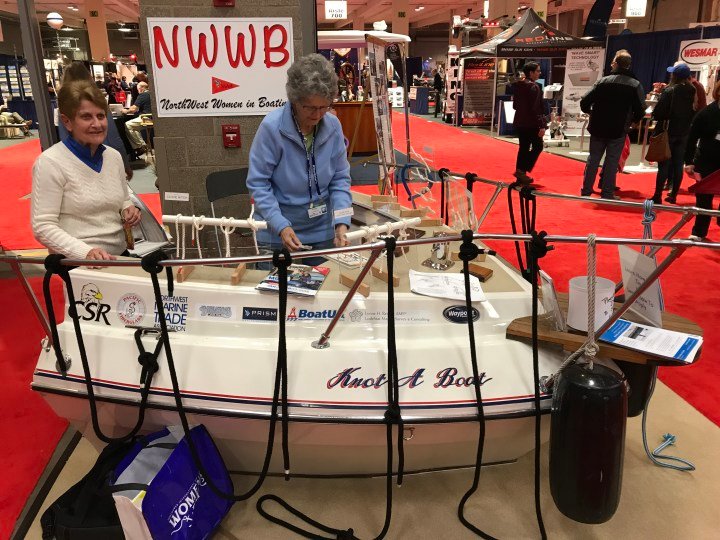
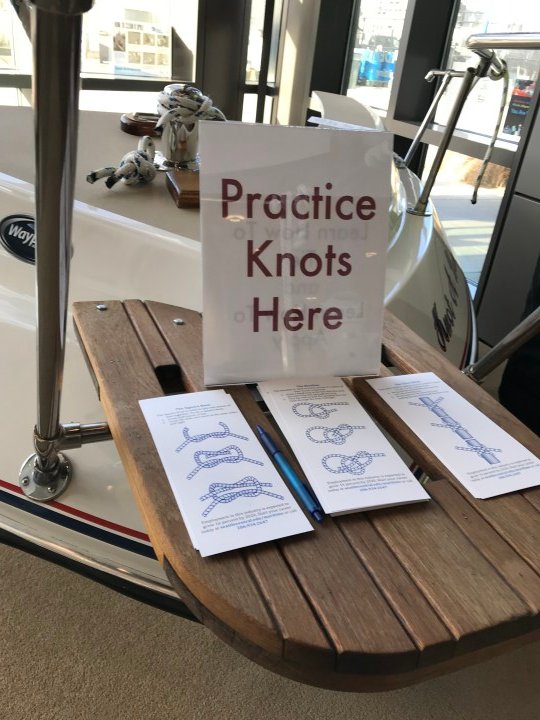
Knot a Boat is a display boat with real railings for you to practice tying fenders to real deck cleats and Samson Posts to cleat dock lines to, and friendly volunteers and instructional flyers to encourage you. It’s totally free! It’s great for families, newbies, and even “Old Salts”. Volunteers at the booth love to teach basic boating knots, but also love it when an old salt comes and teaches a new one!
You’ll find Knot A Boat at booth West 56 at the Seattle Boat Show this
year (2019). That’s on the lower level, near the Information Booth and Food
Court. It’s also outside the Women’s restroom, so a nice way for husbands and
friends to pass the time while a woman is “indisposed”.
We hope you’ll come and visit us and practice some knots! Perhaps you
might also be inspired by the story of how one women’s vision, and the generous
collaboration from local maritime businesses, schools, and individuals created
something for our entire boating community…
What IS Knot A
Boat?
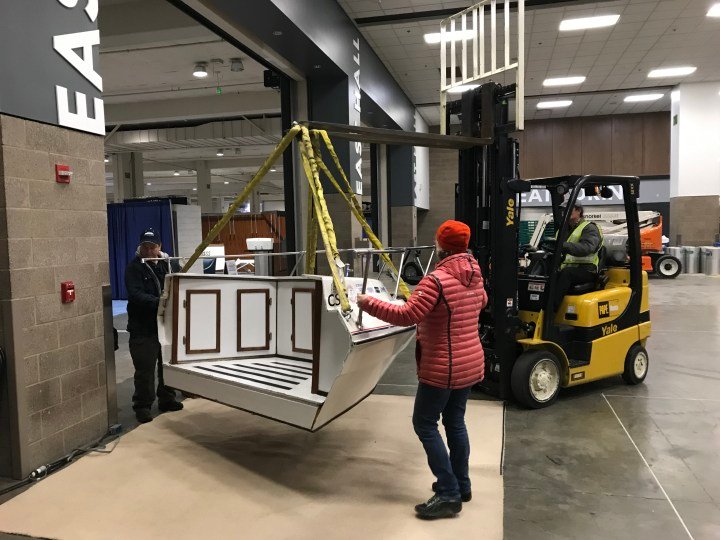
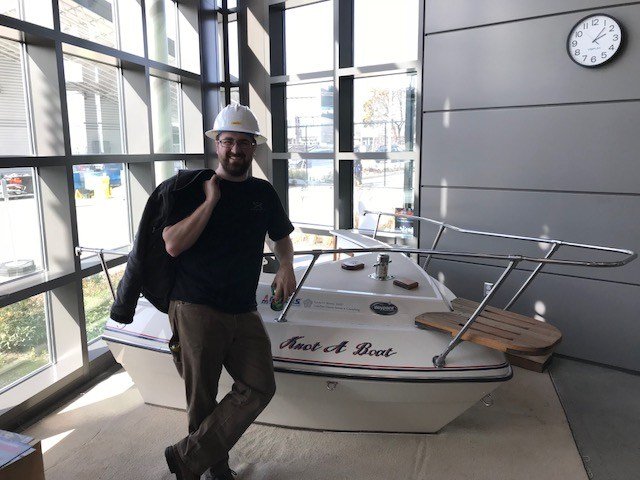
It’s an 8’ by 8’ bow of a fiberglass boat outfitted as a knot-tying training
station. It offers a realistic, three- dimensional opportunity to learn and
practice tying the many knots that we as boaters need to or should use to make
our boating lives safer and easier, but…which we are often out of practice with…or
perhaps never learned.
Where did the IDEA
for Knot A Boat come from?
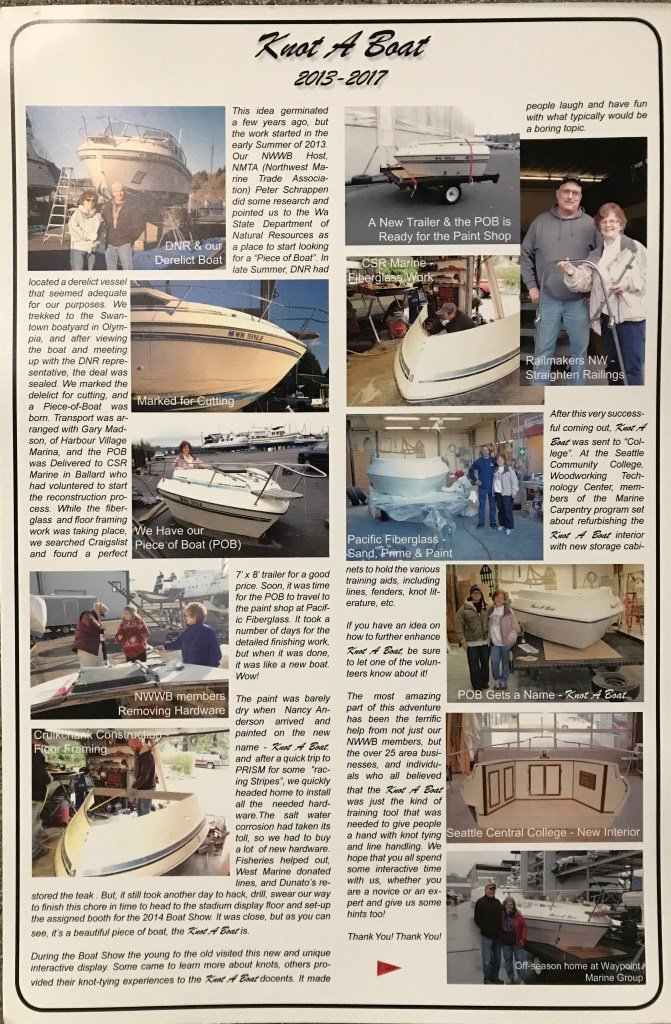
It came from the creative imagination of the co-director/creator of
Northwest Women in Boating, Vivian Strolis. She wanted a hands-on three-dimensional
way of making knot tying stick. A focus of Northwest Women in Boating is
helping improve boating skills for greater safety, and this was a unique way of
supporting that. Plus, there was an enthusiastic community of boat-loving gals
to adopt the idea!
Where did Knot A
Boat itself come from?
It came from ‘the depths of the Puget Sound’. Yep, creative Vivian asked
herself, “Where can we get a boat and someone to cut the end off for us?” It
turned out that the Derelict Vessel Removal Program was the perfect source.
These are the folks who drag up derelict, sunken boats from the depths, and
gather other abandoned boats from around the sound. They were so thrilled that
someone actually wanted to take one of the boats off their hands, or at least
part of one, that they did the actual cutting off of the bow to Vivian’s
specifications!
How did it go from
derelict to ship-shape?
Through the kind generosity of dozens of maritime businesses and folks
around Seattle, Knot A Boat emerged as the attractive teaching station that it
is today. It was a community endeavor embraced by all. Here is a list of those
who made, and continue to make, Knot A Boat possible:
Government
organizations:
WA State Department of
Natural Resources (DNR) –
Derelict Vessel
Removal Program - Melissa Ferris/Jerry Farmer
Sandy Kawamura &
Lance Pascubillo – carpet for booth
Anastasia Reed – carpet for booth
Why is Knot A Boat Featured
at the Seattle Boat Show?
Knot tying is an element of safety onboard that is often overlooked by
boaters. From the beginning, the Northwest Marine Trade Association embraced Knot
A Boat as a unique feature at the Seattle Boat Show. The Booth is
non-commercial, and fun for both those volunteering and the boat show attendees
stopping by. They can relax, engage in conversation and practice the actual
tying of all kinds of knots, using the instructional boards or the expertise of
volunteers. It is an interesting way to promote a feature of safety on board.
What did Knot A
Boat offer to Northwest Women in Boating?
Boating has long been seen as a predominantly male dominated activity. Yet
there are so many talented women doing amazing things on the water! There are
so many women eager to become more knowledgeable and “in charge” out on the
water. There are many women wanting to take a more active role in the boat they
own with a partner. Women who embrace
Northwest Women in Boating are proactive about improving, and even sharing,
their boating skills. Knot A Boat gave women an effective teaching tool to improve
their skills. Very importantly, though it offered an opportunity to put women
‘out front’ as actively involved with promoting and teaching boating skills and
safety on board. Knot A Boat, in a way, became a visible statement to other
women and the larger boating community of women taking charge and saying, “We
are capable of learning and mastering the skills of boating.”
What’s Knot A Boat’s
Future?
Knot A Boat arriving at new home at Seattle Maritime Academy. (Left to
right: Northwest Women in Boating member Juli Tallino, Vivian Strolis, Seattle
Maritime Academy Director/Associate Dean Sarah Scherer)
Vivian continued as caretaker of Knot A Boat, but it needed a permanent
home between Seattle Boat Shows. With the help of Director/Associate Dean Sarah
Scherer and others, it was donated to the Seattle Maritime Academy in Ballard,
where it resides proudly in their lobby as an educational display. They use it
as an inter-active educational display for visiting groups of High Schoolers,
and others, interested in the maritime programs offered by Seattle
Maritime Academy. It’s also used for knot tying classes for
recreational boaters, part of a variety of classes offered to the local boating
community.
Knot A Boat fits in perfectly in Seattle Maritime Academy’s Lobby
Northwest Women in Boating still features Knot A Boat at the Seattle
Boat Show, staffed by volunteers.
We also have this display at the booth, with more pictures and story of
Knot A Boat’s history.
Look for us!
—
Marilyn Michael is co-director of Northwest Women in
Boating. To learn about this no-dues organization for women involved with
boating go to www.nwwb.wordpress.com.
Margaret Pommert is Northwest Women in Boating’s Knot A Boat
booth organizer for the Seattle Boat Show.
While it’s great to read Bruce Hedrick’s weather analyses here on Sailish, it’s even better to hear him in person. A last minute move has put Bruce on stage, literally, tomorrow and next Wednesday.
Here’s the spiel that wasn’t done until after the show programs are printed:
Marine Weather in the Pacific NW: Where to get it and how to interpret It once you get it.
Bruce has been involved in boating in the Pacific Northwest for over five decades and has done just about every major sailboat race on West Coast. He was also the Managing Editor at Northwest Yachting Magazine for 18 years. Currently, he is the Chief Forecaster for Meadow Point Marine, providing event-specific weather forecasts and vessel routing services. He also writes Bruce’s Brief that comes out on most Fridays on sailish.com.
Bruce will be giving weather programs at the Seattle Boat Show tomorrow at 6 pm on Stage 6 and Wednesday, January 30 at 2:15 on Stage 3 in the North Hall. He’ll also be at the NMTA (Northwest Marine Trade Show) booth at various times during the show. Stop by and say hi!
That all seemed a little too reasonable and dry, so the the editors at sailish.com (me, Booboo the mutt and Bijou the Anatolian Shepherd) came up with the following:
Not only will Bruce be able to show you how to predict the weather with 99.2 percent accuracy, he’ll also teach you how to control the weather ahead of time, stop storms when they get too bad and, for you racers, engage a windshift at exactly the right moment. It’s a program not to be missed.
If you’re
thinking about getting out and doing some boating, this would be a great
weekend for it until about Sunday night and into Monday morning. True, winds
will be light until Saturday so maybe it’s a good time to go to the Big Seattle
Boat Show to kick some hulls and check out the latest gear.
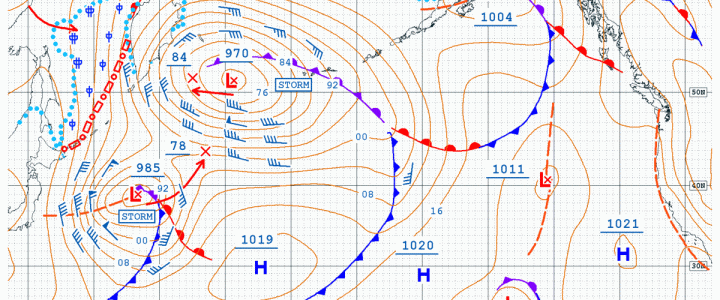
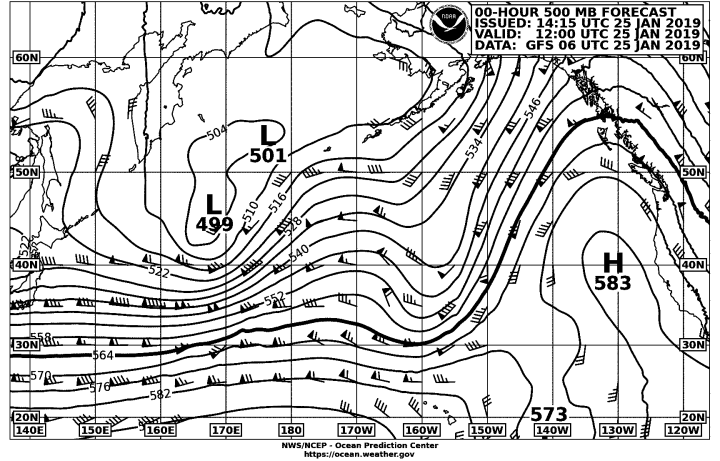
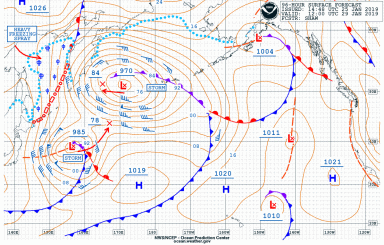
The charts and Sat picture show the reason for all this nice weather which is sort of good news and bad news. The good news is that it’s not rainy, cloudy, gray and cold. The bad news is that we’re not building any snowpack in the mountains. As you can see we’ve got a relatively strong ridge of high pressure over us as noted by the three high-pressure systems. The 1034Mb being right over the Salish Sea with a flanking 1032MB systems to the north and south. Just how strong this ridge is can be seen on the 500MB chart for today. The jetstream (the bold 564 line on the 500MB chart) is being directed into the BC coast north of Haida Gwaii and then east before it goes south into the central US. This will continue for the foreseeable future.
January 25 500MB
January 25 Surface Analysis
January 26 Surface Forecast
January 27 500MB
Jaunary 27 Surface Forecast
There will
be a nice northerly flow over the Salish Sea on Saturday and Sunday however as
the high consolidates and moves to the east on Sunday afternoon and into the
evening, it will also build. This will bring a strong offshore flow to the North Sound and Straits Sunday night. This will
means easterly winds to 30-knots in the
Straits and NE winds to 25-knots in the north and central Sound. This will begin to ease on Monday afternoon and into
Tuesday, with high-pressure still dominating our weather well into the coming
week.
January 29 Surface Forecast
Too bad for
the skiers but good for the boaters.
Enjoy the
weekend.
I’ll be giving a couple of talks on Marine Weather at the Seattle Boat Show, the first being Saturday night at 1800 hours up on the Club Level at Stage #5. The second will be on Wednesday at 1415 hours at Stage #3 in the North Hall. I will also be at the Information Booth this weekend and the next. If you’re at the Show please stop by and say hello.
Ed. Note: Bruce will be giving weather programs at the Seattle Boat Show tomorrow at 6 pm on Stage 6 and Wednesday, January 30 at 2:15 on Stage 3 in the North Hall. He’ll also be at the NMTA (Northwest Marine Trade Show) booth at various times during the show. Stop by and say hi!
Call it Night of the Living Laser. The boat’s been killed and come back from supposed death so many times it puts The Walking Dead and mummies to shame. It was due for another cycle, and wouldn’t you know it,it’s right on schedule. Nobody’s exactly saying death to the Laser, but it’s implied.
The villains previously were dubious management and financial downturns. This time it’s the evil RS Aero, Melges 14 and D-Zero supposedly driving a tiller extension through its heart. Surely it can’t withstand the onslaught of newer, faster and dare we say better boats. Especially if and when one of those others is chosen for the 2024 Olympics. We’ll see the Laser crushed and dumped on the heap of dated and discarded singlehanders like the Opti, Sunfish, OK Dinghy and Finn.
Wait. Those classes aren’t dead. In fact, far from it.
Ah, but this time after the sexy new boats drive that extension through its heart, the Laser will be starved to death by a lack of resources and attention from a primary builder, LaserPerformance. Seems LP has allowed supply chains to whither over the past few years, and now blame it on Bruce Kirby, the ILCA, Brexit and Trump (in the form of his trade war with China – bet you didn’t know he had it in for Laser too.) When my 7-year-old blames everyone else, I know it’s probably his fault. Lazy performance indeed.
OK, here we have the Laser, with a stake through its heart and starved so badly its silly little plastic traveler eyes have turned to dust. Dead. Finally. But one can ever be too sure, so let’s confuse those addled Laser sailors by coming up with new rigs so nobody knows what the hell is going on. (LP is also developing two of their own, the ARC rigs.) Should the Laser crawl up from the grave again, it won’t know where to turn.
So the end is near. Maybe we’ll see the occasional 1970s lime green Lasers with four-digit sail numbers getting dragged up on a beach somewhere. But that’ll be about it, right?
Wrong. Laser has been dead before. She knows her way back to
the living.
Something about her won’t let her die. She’s a harsh taskmaster, one of the harshest. Even the best sailors sometimes come off the water after a frustrating day of Laser sailing muttering about how they can’t sail worth a s%*t. Compared to modern boats, the Laser is made of lead. The improvements over the years to the control lines and now sail and top section have made the boat much more user-friendly than the original, but even with a fancy new squaretop sail nobody really expects it to be as fast as one of the new boats.
But the Laser has that thing – a certain feel, a certain
look – that’s kind of like magic. Few sailing experiences are as visceral as
“getting it right” on a Laser. But that alone won’t keep it out of the grave.
Sailors will keep it out of the grave. And here’s how we’ll do it. We’ll embrace the new classes. What? More people sailing singlehanded dinghies is better. In Seattle we’ve seen the core of the Laser fleet move, en masse, to the RS Aero. That nearly, but didn’t (at least not yet), kill the Laser fleet here. But then some interesting things started happening. World class sailors like Carl Buchan, Jonathan and Libby McKee and Andy Mack reentered the singlehanded scene in RS Aeros. All of a sudden, singlehanding was in again. A few new Laser sailors have started to come out as well, and the better Aero sailors don’t denigrate the old Laser, they respect it for what it is. So, instead of an uninspired Laser class we now have a very active high-end RS Aero class and a Laser fleet that seems less threatening competitively and more appealing financially to newcomers. We share planning and resources with our friends who’ve moved on to Aeros and work together on regattas. We all sail under the Seattle Laser Fleet banner.
At this point it’s worth mentioning that West Coast Sailing, while fully embracing and pushing the sexy RS Aero, didn’t leave the Laser jilted in the rain on a corner. WCS continued to turn over every rock for every silly traveler eye out there so that we could continue racing.
But wait, there’s more. Don’t look now, but in our region (the Pacific Northwest) there are a lot of kids out there who are coming out of high school sailing programs. By working with the local high school, college and yacht club coaches and community sailing programs, the Seattle Laser Fleet has already seen growing participation. Kids, perhaps more than adults, can appreciate the simplicity, ruggedness and cheapness of the Lasers. Hey, it’s a chance to sail against your buddies, right, and anybody can find a Laser to sail.
And as far as us old guys go, there is simply nothing out there comparable to Lasers Masters sailing, especially for the Masters Worlds. You have more in common with that Ukranian on your weather hip that you do with 99 percent of the people in your home harbor - guaranteed.
I agree with Jean-Pierre Kiekens’ proposal published in Sailing Anarchy for us all to take a deep breath, but I don’t think it revolves around the Olympic status. The Laser will be around with or without the Olympics. As Kiekens pointed out, the sailors need to reconnect with ILCA and really determine where we want to go with rigs. And Lazy Performance has to get their act together with regards to parts. Wait, make that get their act together with regards to everything or get out of the way.
But in the meantime, they’re still great boats and there is still lots of good sailing left in them. I don’t agree with Kiekens that it’s time to unrig. Keep rigging, keep sailing and get those kids out there. It’s still a kick-ass boat.
Lasers seldom have names. But I might name mine Walking Dead. For the season at least.
–Kurt Hoehne, Laser sailor since 1978 and District 22 Secretary.
Plenty of breeze headed your way this afternoon, this evening and
into Saturday morning especially if you live on the coast, Vancouver Island,
eastern end of the Strait of JdF, and Haida Gwaii. The central Sound will get
some wind like maybe 25 knots from the south-southeast early tomorrow morning
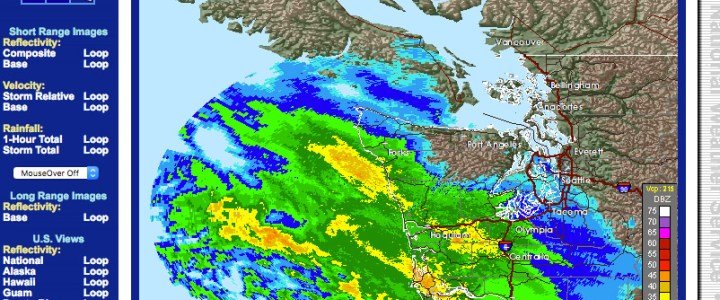
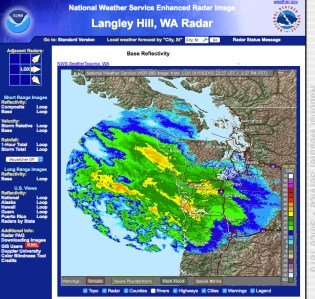
before easing off. The Doppler Radar at Langley Hill on the coast is already
picking up the start of this activity off the north coast of Oregon.
Enhanced Radar Image, Langley Hill.
Environment Canada has already issued a Hurricane Force Wind
Warning for the Northern part of Vancouver Island for winds of 70-75 knots near
headlands. They are also forecasting waves of 30-40 feet, YIKES.
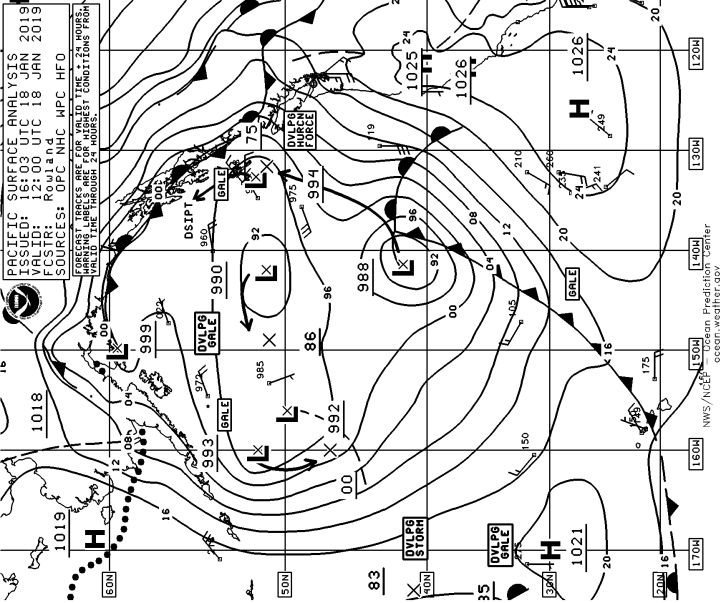
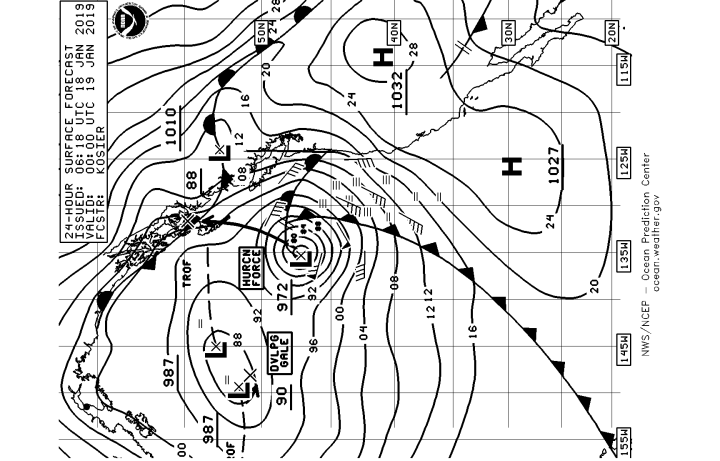
The Surface Analysis for today shows this low (988MB) with
attached frontal system running into a weak ridge of high pressure that extends
from southern Washington to about mid California. The Surface Forecast Chart
for tomorrow morning shows that this low has now intensified to 973MB, is now
quite round with a very tightly packed isobar structure and the warning box: Hurcn
Force. This chart also shows that this rapidly moving front is now over the
Cascades headed in a northeasterly direction and pushing that weak ridge of
high-pressure off to the south. This will open the door for more storm activity
this coming week.
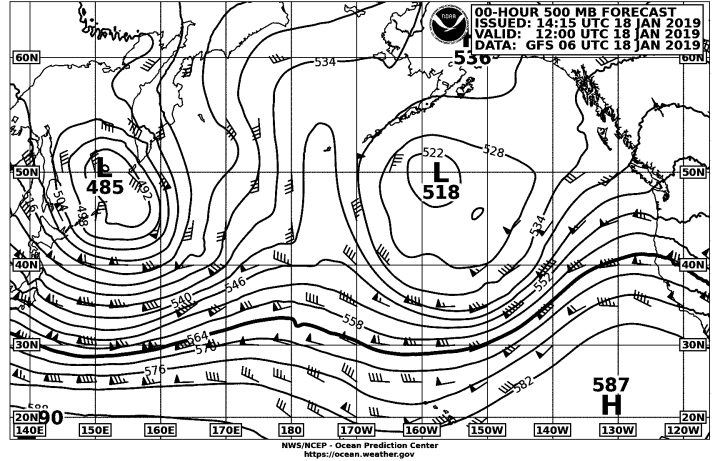
00 Hour 500MB Forecast January 18
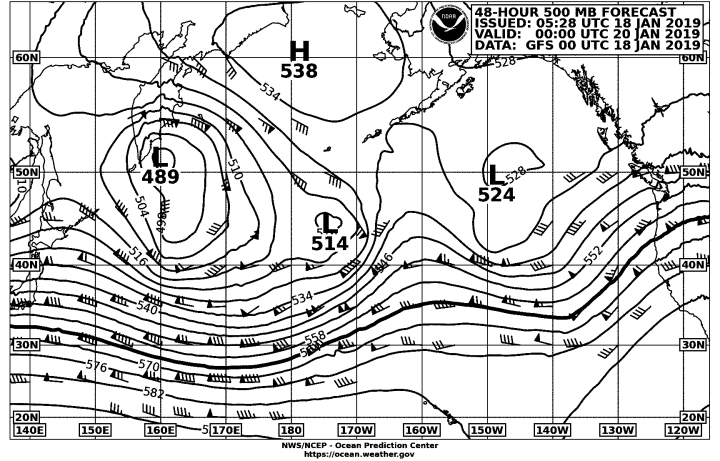
48 Hour 500MB Forecast January 18
Surface Analysis January 18
Surface Forecast January 19
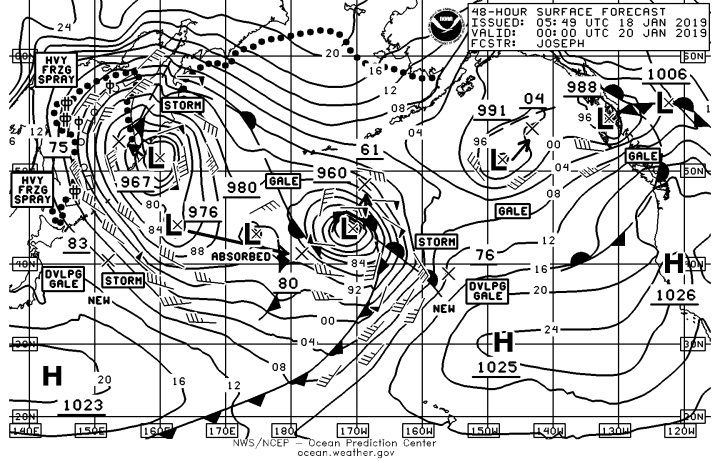
Surface Forecast January 20
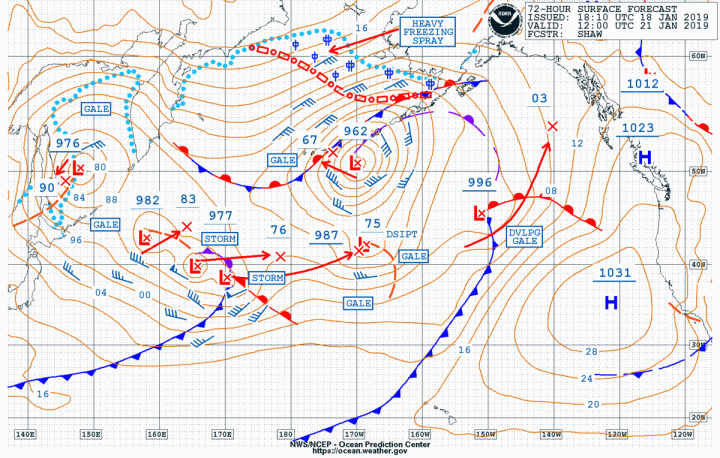
Surface Forecast January 21
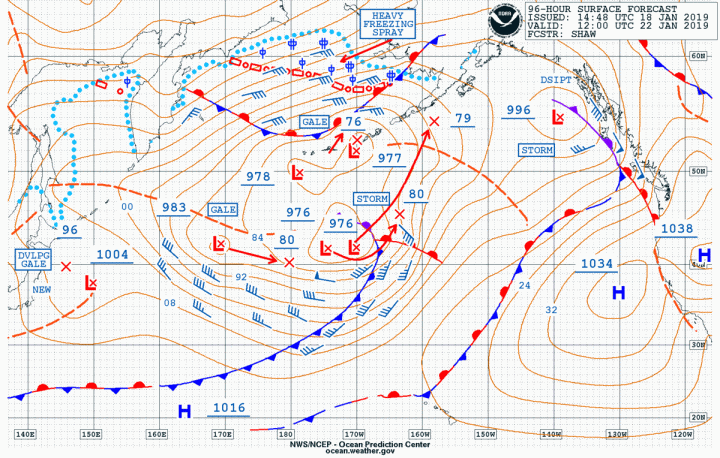
Surface Foreast January 22
The Surface Forecast Chart for 20 Jan shows a plethora (11 to be
exact) of low-pressure systems strewn across the Pacific, including a 959MB
whopper in the mid-Pacific which is moving our way directed by the jet stream,
see the 500MB charts.
The 21 Jan chart does offer us some relief as the 959MB Low is
now forecast to stall and weaken in the mid-Pacific as a ridge of high-pressure
rebuilds along the coast giving us light air and some very nice mid-winter
conditions.
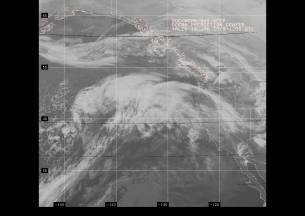
Current Satellite image, Ocean Prediction Center.
By the 22nd of January the high off of San Francisco has now built to 1034MB and is now linked to a 1038MB high over northern Nevada. This will continue to help direct storm activity to the north of the Pacific Northwest however winter is a long way from over.
The Big Seattle Boat Show starts on the 25th of January. I’ll be working in the NMTA Information Booth Friday and Saturday both weekends so stop by and say hello if you’re at the show.
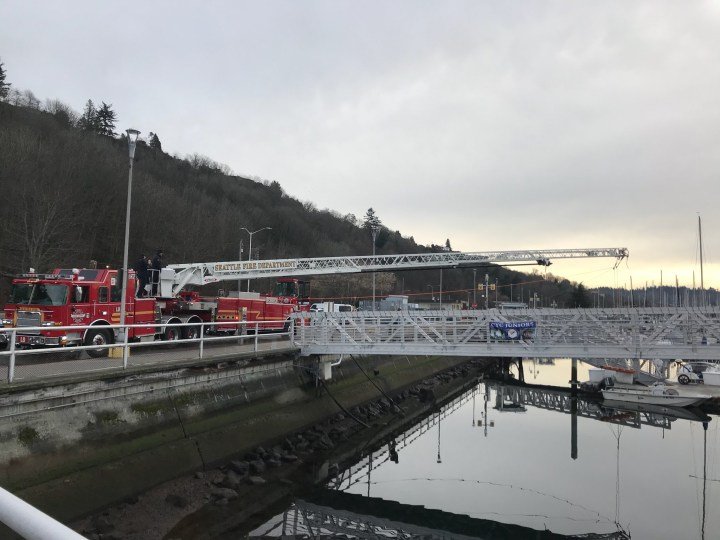
Actually, there’s no fire this time. The Seattle Fire Department was at Shilshole practicing. Alert liveaboard (and a quick one with a phone camera) Scott Malone explains: “The fire fighters were practicing for injured personnel removal from dock and boats with the backboard and extension ladder.”
I guess old boat aficionados are a lot like old car buffs. We love the history and we love seeing what was done before. Below is a reprint from an article that first appeared in the May 2015 issue of 48 North. Author Ken Howe has offered it up again, and we’re happy to reprint it here as part of an ongoing effort to promote community sailing programs and entry-level sailing. The Washington Yacht Club is certainly one of those opportunities for University of Washington students, alumni and alumni club members.
(If your club or community sailing organization wants some coverage, email me and let’s get it going.)
The UW Husky
By Kenneth Howe
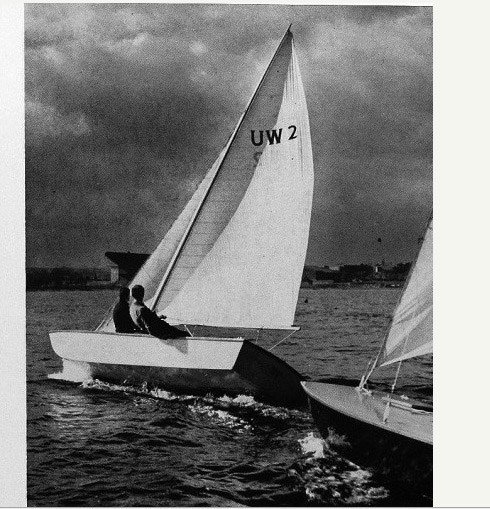
The Husky. Not to be mistaken for an E-Scow.
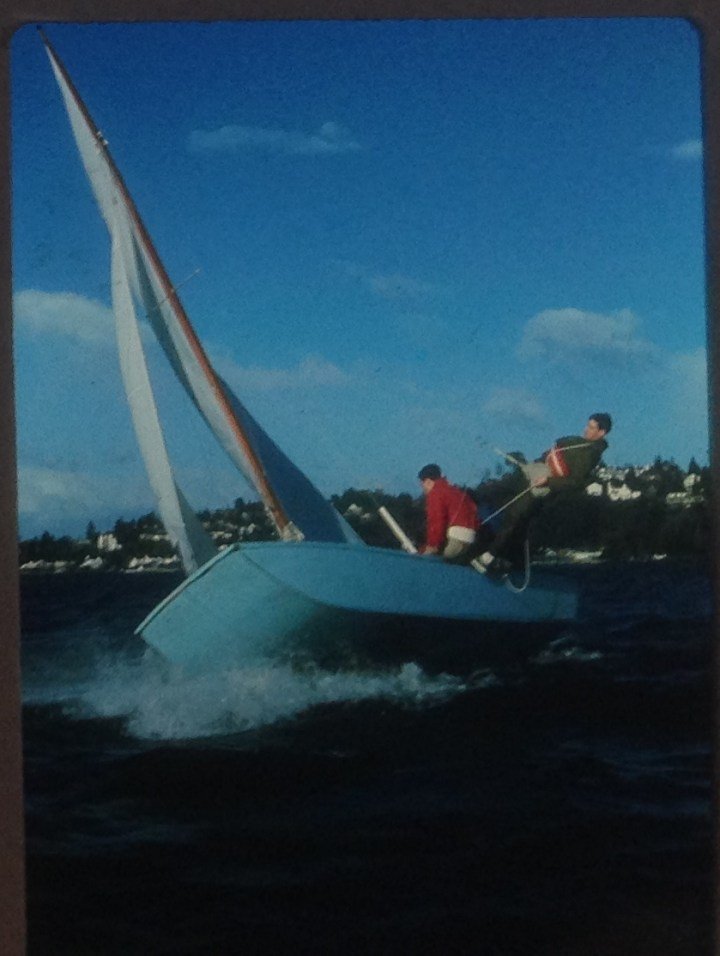
In 1950, the new University of Washington sailing club needed racing dinghies and they wanted to call them Huskies. They needed six boats to sponsor competitions and teach sailing to a growing membership. Previously, club sailors had been sharing their own personal boats for instruction. After the old Shell House on the Montlake Cut was remodeled, the club was offered space to house boats and gear in the building. A design competition was held by the club asking local boat builders for a dinghy that would be stable enough for teaching and also be competitive in intercollegiate competition. The University agreed to loan the new club $3000. Bill Nightingale of Olympic Boat won the competition and the contract to build the Huskies. His self -rescuing 18’ sloop featured a mahogany plywood hull with fore and aft deck hatches. It had a bow that was designed to plane like a scow. The sloop rig and single rudder in a deck insert made it like the Geary 18, “flattie” that had been popular for instruction.
Over several months, the six boats
were delivered and then rigged by club members. Three of the hulls were painted
blue and the other three yellow. The decks were varnished mahogany. On February
5, 1951 the boats were dedicated and given Husky mascot names. From the Canoe
House, the Huskies on dollies were winched down the ramp into the Montlake Cut.
A small dock was available, but the launching site proved challenging for new
students and reports of damage when landing appeared often in club minutes. The
Husky mast was too tall; it needed to be partially lowered to fit through the
opening cut into the hanger door. Lowering the mast became one of several skill
requirements for a skipper rating on a Husky.
Alan Murray, commodore in 1971, relayed
a club story about how fast a Husky sailed downwind, “Since Huskies were
normally sailed during heavy weather, they would plane very fast down the cut.
Apparently this was noticed by the Seattle police boat who pulled the sailors over
for exceeding the 7 MPH speed limit. The foreign-born skipper was quoted as
saying to the officer, “Vel, vat you vant me to do, drag my foot?”
The Husky sail area turned out to be
inadequate for light wind sailing and required stronger winds to perform well.
This resulted in skippers challenging themselves in high winds and often sailing
single handed. In 1951, the UW Daily reported, “Sailor Swims When Sailboat
Becomes Sub” describing how a new member took the Husky out by himself when
storm warnings were posted. After he capsized three times, he abandoned the Husky
and tried to swim to shore. Harbor patrol and the crew launch went out to
assist him.
A fine party boat too.
Norm Ahlquist, a member since 1966,
described sailing a Husky single -handed and what probably happened to the
rescued skipper.
“Sure. I did it a few times, but not
in a blow (defined as 20+ for Huskies). I easily steered with my foot, leaving both
hands for the main. To sail upwind in a blow you had to sail with a big heel to
narrow the hull for the waves, but it’s difficult to dump the sails single handed,
as he apparently discovered.”
Norm went on to describe the other challenges
of the Husky, “As I recall the legend, the club wanted something that would be ‘self-rescuing
and plane.’ The Huskies were that, provided the hatch covers stayed on and the
wind blew over 40. When completely swamped, they would float deck awash. If you
stood on it you would sink to about your armpits.”
A spinnaker was eventually added to
the Husky and the varnished decks were painted over with non-skid paint to make
them safer. In the late 60’s and early 70’s, three Huskies became boats for
experimentation. An extension was spliced onto the mast and a larger sail added.
The hope was that the boats would
plane in lighter winds and work with a trapeze. The new design was called the “Super
Husky.” One boat was changed to a full scow design.
Beyond
instruction and racing, the Huskies were used for club cruises on Lake
Washington and Puget Sound. Fraternities and local colleges were allowed to
rent the Huskies for races so they also became a source of income for the club.
Because the Husky could hold up to six people, it became invaluable to the club
during Open House events. Students would see a Husky displayed on campus and
then come down for the Saturday free sail with a club skipper.
In the 1960’s, an
outboard motor bracket was designed that fit over the transom and slipped into
the back hatch. This made the Huskies independent through the locks and self
powered as a parade float.
In the Opening
Day parades, the Husky was used as the platform to cover with decorations. The
Husky paraded as a killer whale chasing mermaids, a little tug towing a duck, and
a bicycle powered paddle wheeler.
As other designs
were added in the 1970s, the three remaining Huskies sat unused inside the
Canoe House. The roof leaked so much before restoration that one boat had
already rotted away inside the building. Earlier, a boat with a damaged mast
was converted to an outboard powered committee boat. The Huskies lost respect
to the point that a motion was made at a club meeting that the remaining boats should
be stripped of rigging, towed to Blake Island, and broken apart to feed a giant
bonfire. This did not happen. Two boats were sold and the last totally rotted
one was broken apart and sent to the dump.
In 1980, the old
wooden Shell/ Canoe House was preserved as a historic landmark, while the old wooden
Huskies who called it home for 30 years were preserved only in memories.
Ken Howe joined WYC in 2010 as his retirement project; he became Head Fleet Captain and Instructor, and also known for his energetic boat decorations for Duck Dodge.
This sounds like a very worthwhile meeting. Considering our geography, boats might be key to helping out the community in a crisis scenario. Over the decades, private boats and skilled skippers have often been key to helping out, and knowing some of the considerations beforehand can only help. The meeting is at 1900 hours at CYC-Seattle. -KH
Learn how the boating community can come together to help each other in a time of crisis. Byron Hardinge, the City of Seattle, Office of Emergency Management’s Disaster Preparedness Expert will walk us through potential disaster scenarios and train us to be ready when disaster strikes. Shilshole boaters have the unique opportunity to provide transportation on the regional waterways and communication via HAM radio, the city’s only reliable method of communication during a disaster. Take the first step to being prepared and join us on Thursday, Jan 17th from 7:00pm to 8:00pm. Bar will be open and light snacks available.
Registration is limited to 80, so sign up soon! Link.